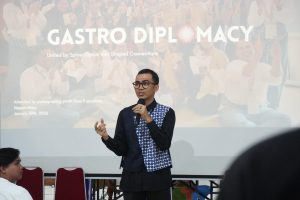
Negel Sigit presents how local identity can contribute to global civilization.
“Never underestimate your roots because that’s where your power begins.” – Negel Sigit
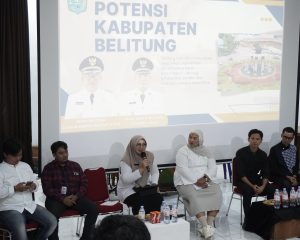
On the 25th of March, 2025, a forum of unusual intellectual distinction convened at the Theatre Building of the Belitong Geopark Information Centre — a gathering that resisted easy classification within the conventions of academic symposia. Beneath the banner of The Human Landscape of Belitong: Conversations at the Intersection of Science and Society, it drew together scholars, government servants, postgraduate researchers, and field practitioners into a single space of multidisciplinary dialogue that unfolded across four and a half hours of sustained, layered conversation. The forum was co-initiated by the Belitong Scholars Association or Ikatan Keluarga Pelajar Belitong (IKPB) Bandung, under the chairmanship of Muhammad Belva Juliadi, and the Belitong UNESCO Global Geopark Management Board, represented by Septi Anggraheni, who concurrently serves as Head of DPMPTSPP Belitung Regency. Yet to describe it merely as a symposium would be to miss its deeper intention. This was a deliberate epistemic act; a collective and carefully orchestrated effort to reclaim cognitive authority over local identity in the face of an accelerating tide of global pressures that no island, however small, can any longer afford to ignore.
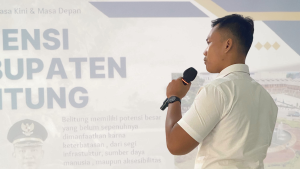
Iben as a student from Ahmad Dahlan University raises a question on how Belitong navigates global pressures from the energy crisis to El Niño.
The theme chosen — Reconstruction of the ‘Urang Kampong’ Identity: From Social Stigma to Local Strength and Global Competitiveness of Students — was selected precisely for its epistemological provocation. The term urang kampong, drawn from the Belitong Islanders vernacular, has long carried pejorative weight in metropolitan academic corridors: connotations of backwardness, marginality, and pre-modernity. The intellectual proposition at the heart of this forum was the deliberate inversion of that valuation, deep-rootedness in a place, its geology, its biodiversity, its oral traditions, its social architecture, its systems of local knowledge, is not merely a cultural heritage to be preserved in the manner of a museum exhibit. It constitutes a form of epistemic capital that is rare, non-replicable, and of rising value in the global sustainability discourse of the twenty-first century. Within the frameworks of contemporary science, this is not romanticism. It is an argument that can be tested, defended, and demonstrated empirically.
Planetary Pressures: A Statistical Framework That Sharpens the Urgency
To appreciate the urgency that animated every session of this forum, one must first reckon honestly with the panorama of quantitative data that frames the existential condition of island communities across Southeast Asia. Global mean temperature had already risen by 1.45°C above the pre-industrial baseline as of 2023, according to the World Meteorological Organization — a figure that represents not merely a threshold but an acceleration in the rate of warming that statistically exceeds the projections of climate models from the preceding decade. For island communities with limited agricultural buffers, such as Belitong Island, each tenth of a degree carries non-linear implications for hydrological systems, plant phenology, and the productivity of coral reef ecosystems upon which so much of the island’s economic and ecological identity depends.
Deloitte Insights (2022) projected that approximately 17% of Southeast Asia’s GDP faces disruption from climate change by 2050 — a figure that implies the loss of trillions of dollars and the dislocation of tens of millions of livelihoods. Climate Central (2023) documented that more than 75 million people in coastal Southeast Asia face meaningful threats from sea-level rise within the same timeframe. The International Organization for Migration (IOM, 2023) placed Indonesia among the top ten brain-drain nations globally — a designation that, for a community as small as Belitong, with a total population of approximately 300,000 souls, is experienced not as an abstract national statistic but as a palpable demographic thinning, felt in the quietness of villages and the empty chairs of families whose brightest children have not returned. BPS and ILO data (2023) add yet another analytical layer: 22.4% of Indonesian youth between the ages of 15 and 24 currently fall within the NEET category — Not in Education, Employment, or Training — an indicator that in the development economics literature correlates strongly with long-term social vulnerability and the erosion of a community’s adaptive capacity over time.
These figures do not stand in isolation. They form a web of systemic causality, each thread pulling taut against the others. Rising global temperatures intensify the El Niño–Southern Oscillation cycle, increasing the probability of extreme drought during the dry months of April through August on islands with limited freshwater reserves. NOAA reported that the 2023–2024 El Niño ranked among the five strongest ever recorded, and NOAA-BMKG projections suggest approximately a 60% probability of another extreme El Niño event within the 2025–2027 window. The coral bleaching events that follow such episodes threaten the marine biodiversity that underpins geopark-based tourism. Food insecurity accelerates outward migration, which in turn drains precisely the human capacity most needed to design and implement adaptive responses. And yet — as the forum’s speakers collectively and compellingly argued — each of these data points also carries within it the signal of an opportunity. For a community possessed of robust identity-infrastructure and functional intergenerational solidarity, planetary crisis need not be merely an existential threat passively endured. It can become the catalyst for a form of development that leapfrogs the conventional traps of peripheral economies.
Cecen Nurlita, an environmental politics researcher, explains the anthropological characteristics and epistemology of Belitong society in relation to global conditions.
Political Ecology and the Epistemology of Environment: The Contribution of Cecen Nurlita
Among the forum’s most scientifically substantive contributions came from Cecen Nurlita, a researcher in political ecology who also serves as a data contributor to the Geopark’s management body. Political ecology as a discipline — emerging from the fertile intersection of human geography, environmental anthropology, and political science — reads environmental change as inseparable from relations of power, institutional design, and historical contestation. This is a methodological stance that distinguishes it fundamentally from conventional ecology, which tends to treat environmental systems as entities amenable to analysis independent of their social and political contexts.
Nurlita advanced two arguments that locked together with analytical precision. The First: That Belitong’s ecological and social resilience can only be understood in relation to the political conditions that produced it — the extraction economy that left deep structural imprints on land tenure and productive relations; the post-independence centralisation that for decades reduced regional autonomy over natural resource governance; and the post-Reformation decentralisation experiment that granted regencies such as Belitong Island meaningful authority over their resource management. Each layer of political history has shaped the institutional repertoire and adaptive capacity of the community as it exists today.
The second argument — and this is her most epistemologically ambitious — concerns the status of ethnoecological knowledge embedded in local custom and community practice. In the vocabulary of the philosophy of science, this is a question of epistemological pluralism: is only that knowledge which can be quantified and represented in formats recognised by formal scientific institutions to be counted as valid knowledge? Nurlita, working within an intellectual tradition that includes Arturo Escobar’s concept of lugar and Boaventura de Sousa Santos’s formulation of epistemologies of the South, answers with quiet firmness: No. Traditional fishing calendars calibrated to seasonal marine cycles, place-spirit narratives encoded in oral literature, ecologically-grounded taboo systems within customary law — all of these carry environmental data accumulated across generations that cannot be straightforwardly substituted by satellite monitoring or species inventories, however rigorous. Her insistence on political literacy — the capacity to read policy documents, navigate regulatory landscapes, and engage critically with governance processes — was framed not as an elite academic skill but as a survival competence for island communities navigating extractive pressures from outside.
Septi Anggraheni and Cecen Nurlita engage in a discourse on the phenomenon of “Belitong Brain Drain.”
Brain Drain as Structural Phenomenon: Beyond the Language of Individual Choice
The brain drain phenomenon addressed by Septi Anggraheni and Cecen Nurlita deserves analytical elaboration beyond the terms in which it most commonly appears in public discourse. In the development economics literature, high-skilled emigration has traditionally been treated as a negative externality of educational systems that invest in human capital but cannot internalise the return when individuals migrate to higher-wage economies. Bhagwati’s brain drain tax model and Mountford’s brain gain through emigration probability model offer normatively divergent frameworks, but both agree that the impact is contextual and contingent on existing institutional structures.
For a community the size of Belitong — an island of approximately 300,000 people — the dynamics operate in a demographic register entirely different from that of a large national economy. The departure of even a few hundred educated individuals from local circulation can meaningfully shift the distribution of cognitive capacity and technical skill within the community. This is not an argument for forced retention or anti-mobility — mobility remains both a right and an important mechanism for knowledge accumulation. It is an argument for recognising that policies designed for aggregated national contexts may produce effects that are radically different, even inverse, when applied to small island communities.
Edwinnata, a master’s student at a university in Taichung, Taiwan, and a native son of Belitong Island.
What is empirically compelling is Septi’s reframing of brain drain into what the scholarly literature calls the diaspora dividend — a conceptual pivot that transforms the narrative of loss into one of potential circulatory gain. Saxenian (2006), in her landmark study of Silicon Valley diaspora networks, documented how educated immigrants from Taiwan, India, and China built knowledge bridges that significantly accelerated technology transfer to their home countries — not through permanent physical return, but through the circulation of knowledge, business networks, and investment managed transnationally. This model — which Saxenian termed brain circulation as distinct from brain drain — offers a more empirically accurate and more generative framework for understanding the potential of the Belitong diaspora.
Edwinnata, a Belitong-born master’s candidate currently based at Taichung University in Taiwan, offered a living demonstration of this circulatory mechanism. His navigation of diverse international contexts — youth exchanges in the United States and Russia, academic collaborations in Malaysia, presentations of geopark-related research at conferences in Hong Kong and Vietnam — was not presented as a catalogue of cosmopolitan trophies but as empirical evidence for a structural argument. The gap between local communities and global knowledge networks is not fixed. It is negotiable, and the primary mechanism for negotiating it is not the wholesale acquisition of external knowledge, but the cultivation of the capacity to translate local knowledge into internationally legible forms. Understanding Belitong allows a researcher from this island to position the community’s story within conversations that global scientific institutions genuinely care about — conversations about continental shelf formation, Pleistocene sea-level change, and the deep-time record of human-environment interaction in island Southeast Asia.
Muhammad Ali Akbar, a graduate of Institut Pemerintahan Dalam Negeri (IPDN) or Institute of Home Affairs Governance, currently serving as a staff member at BKSDM (the Regional Civil Service and Human Resource Development Agency).
Intergenerational Governance and the Theory of Systemic Change
Muhammad Ali Akbar, a government staff member and graduate of the Institut Pemerintahan Dalam Negeri (IPDN) — the institution specifically dedicated to educating Indonesia’s next generation of regional administrators — introduced a dimension that is conceptually important yet frequently absent from youth empowerment discourse; how does systemic change actually work within bureaucratic structures, and what does it require of those who seek to bring it about?
In the public administration literature, two theories of change are often placed in contrast. The first — the outside-in theory — holds that institutional reform is most effectively driven by external pressure: civil society mobilisation, academic advocacy, media attention, and public accountability mechanisms that compel institutions to change from without. The second — the inside-out theory — argues that durable change requires reform agents who possess deep understanding of an institution’s internal logic; who the key decision-makers are, where discretionary space exists, how bureaucratic incentives operate, and where small, well-positioned interventions can produce disproportionate systemic effects.
Ali Akbar, through his choice to work within state structures, implicitly advocated a more nuanced position that both theories of change are necessary, and that the most effective agents are those who can move fluidly between them. His argument for intergenerational collaboration — understood not merely as an interpersonal value but as the maximisation of physical, psychological, and cognitive capacity across generational cohorts — finds empirical grounding in the organisational literature. Research by Zenger and Lawrence (1989) and Joshi et al. (2011) on age diversity in working teams consistently found that well-managed age-heterogeneous teams demonstrate more creative problem-solving and more robust decision-making than generationally homogeneous ones — precisely because they combine complementary strengths that no single cohort possesses alone. Senior administrators carry institutional memory, relational capital, and risk-calibrated judgment built over decades of navigating complex bureaucratic environments; younger officials bring digital fluency, international awareness, and a higher tolerance for the ambiguity that characterises decisions made under conditions of rapid and compounding change.
Negel Sigit, a Belitong Island gastronomy researcher, food and lifestyle Influencer, and an Indonesian delegate to SSEAYP (Ship for Southeast Asian and Japanese Youth Program).
Gastrodiplomacy as Geopolitical Instrument: Reading Negel Sigit Scientifically
The contribution of Negel Sigit on the subject of gastrodiplomacy — which on its surface appeared the most distant from the register of scientific discourse — in fact engages a rapidly developing body of literature in political science and international relations studies. The concept of culinary diplomacy was first systematically articulated by Paul Rockower in his seminal essay (2012) in The Hague Journal of Diplomacy, where he defined it as the use of food as an instrument of foreign policy and a tool for building cross-cultural understanding. But its theoretical foundations reach considerably deeper.
Joseph Nye’s theory of soft power (2004) proposed that in a multipolar post-Cold War international system, the capacity of an actor to shape the preferences of others through attraction and legitimacy — rather than through coercion or payment — constitutes an increasingly decisive source of influence. Food, as one of the most immediate and sensory media of cross-cultural communication, operates at a pre-cognitive level that transcends what diplomatic documents or academic presentations can achieve. He was creating a sensory experience that activates olfactory and gustatory memory in ways that are, according to neurogastronomy research (Gordon Shepherd, 2012) and cross-cultural psychology, more enduring and affectively more powerful than information processed through conventional cognitive channels. Shared culinary experience generates social bonds whose functional intensity rivals that of far longer and more formal interactions.
For Indonesia as a middle power increasingly active in the regional architecture of ASEAN and the Indo-Pacific, the strategic implications of this argument are not trivial. Thailand has since 2002 operated its Global Thai programme, explicitly deploying the expansion of Thai restaurants abroad as a soft power instrument — a programme extensively studied as a model of structured gastrodiplomacy (Chapple-Sokol, 2013). South Korea pursued an analogous strategy through hansik globalisation, which significantly preceded and amplified the Korean Wave in music and cinema. Belitong, with culinary traditions rooted in centuries of creative encounter between Malay, Chinese, and Austronesian Roots influences, possesses gastrodiplomatic capital that has not yet been mobilised with strategic intentionality.
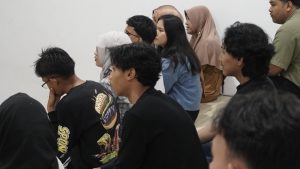
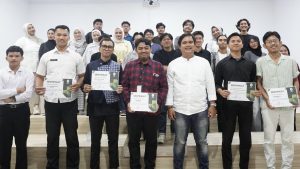
Participants from the Belitong Student Family Association (Bandung chapter), along with students from various universities both in Indonesia and abroad, attended the event.
Legal Literacy as Ecological Competence
Eggie, Legal Extension Officer of Belitung Regency, brought the forum to its close with an argument that, though technical in its surface presentation, touches on what the natural resource governance literature terms regulatory accessibility. Ostrom’s foundational research (1990) on the governance of commons identified one of the most critical design principles for successful shared resource management showed boundaries and rules must be clearly understood by all users who are affected by them. When regulations are written in techno-juridical language inaccessible to the communities most directly impacted, this principle is violated — and with it, the basis of effective and equitable governance dissolves.
The digital platform developed by Belitung Goverment, Eggie explained to disseminate Belitung Regency’s regional regulations is, within Ostrom’s framework, a significant institutional design intervention. It reduces the cognitive transaction costs of accessing regulatory information — a form of information asymmetry reduction that North (1990), in his institutional economics framework, identifies as a prerequisite for institutions to function efficiently and justly. More than this, in the specific context of Geopark governance, regulatory literacy carries direct ecological dimensions, communities that cannot read, access, or interpret environmental protection regulations, resource utilisation licensing procedures, or environmental grievance mechanisms are structurally incapable of defending their own ecological rights — regardless of how rich their traditional ecological knowledge may be.
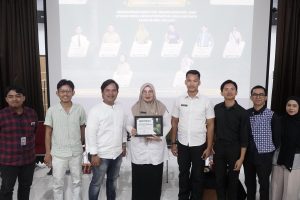
A photo session featuring the speakers.
Synthesis: Six Movements, One Argument
The six voices assembled at the Theater Building of the Belitong Geopark Information Center — when read as a single continuous argument rather than a sequence of separate presentations — articulate a thesis that is both coherent and scientifically defensible. The relationship between local identity and global agency, in the context of twenty-first century planetary challenges, is not one of trade-off but of strategic alignment. The argument moves through six logically sequential stages: Grounding (Septi Anggraheni establishes that the uniqueness of a place is a strategic asset); Decoding (Cecen Nurlita provides the epistemological interpretive key); Institutionalising (Ali Akbar demonstrates that systemic change requires presence within institutions, not merely critique from without); Bridging (Edwinnata demonstrates the concrete mechanisms through which local knowledge becomes legible in international arenas); Enchanting (Negel Sigit establishes gastrodiplomacy as a measurable soft power instrument); and Operationalising (Eggie closes the argumentative loop by supplying the textual infrastructure that makes civic agency materially possible).
Together, these six movements reject two positions that too often dominate the discourse of small island community development. The localist nostalgia that romanticises indigenous identity without providing operational mechanisms for sustaining it under real global conditions; and the rootless universalism that treats integration into global networks as a solution requiring the relinquishment of particular identities. What this forum offered instead was something epistemologically more ambitious — a metamodernist position that refuses to choose between the two, and poses the more productive question; how precisely does particularity become competitive advantage in the global arena, and what institutions must be built to enable the knowledge circuits that connect local depth with global reach?
Arry Aditsya Yoga discusses metamodernism, the potential energy crisis, advancements in quantum computing and AI, as well as El Niño and the Indian Ocean Dipole (IOD).
Though modest in scale, this forum generated implications that reach well beyond the shores of Belitong. For small island communities across Indonesia and the wider Asia-Pacific facing analogous combinations of pressure — climate change, brain drain, post-extractive economic transition, and the imperative of integration into global knowledge networks — it offers a model worthy of rigorous empirical investigation. Questions that emerge from its proceedings and demand further research include like how effective is the UNESCO Geopark framework as an anti-brain-drain mechanism in the specific context of Indonesian archipelagic communities? Does digital regulatory literacy produce measurable increases in community participation in governance processes? How do diaspora networks organised around geopark identity differ in character and effectiveness from those organised around ethnic or regional ties?
Most fundamentally, the forum that gathered in the Theater Building of the Belitong Geopark Information Center on 25 March 2025 affirmed a proposition gaining increasing empirical support in the sustainability sciences and development studies in a world progressively homogenised by global supply chains, digital platforms, and universal institutional templates, what is rarest — and therefore most strategically valuable — is precisely what is most local. Knowledge specific to a place, practice embedded in a particular community, a story that can only be told from here — these are not the periphery of the global conversation about the future of this planet. They are, in a way the world is only beginning to understand, among its most necessary voices.
Closing session photos with the participants.
There is a particular quality of light in the late afternoon on Belitong — the ancient granite boulders catch it and hold it in a manner found nowhere else on earth. That irreducible specificity is what this forum was ultimately about: the quiet and luminous proposition that particularity, far from being an obstacle to global relevance, is its very precondition.
Corresponding Author: Arry Aditsya Yoga | Researcher in International Law, Ecopolitology, and Anthropology.