
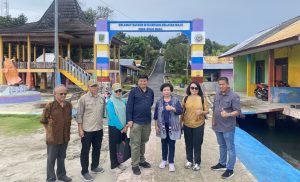
In an effort to strengthen investment opportunities and sustainable management of small islands in Belitung Regency, Bangka Belitung Islands Province, the Ministry of Marine Affairs and Fisheries (MMAF) conducted a coordination and field visit to several small islands, focusing on Mendanau Island, part of the Mendanau Geosite within the Belitong UNESCO Global Geopark.
The visit was led by the Director of Coastal and Small Islands Utilization, Permana Yudiarso, and the Director of Coastal and Small Islands, Ahmad Aris. Their main agenda was to observe ongoing community-based programs and see the island’s potential as a pilot project for a carbon-free island in Indonesia’s marine and fisheries sector.
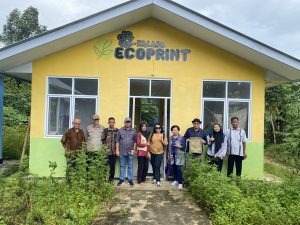
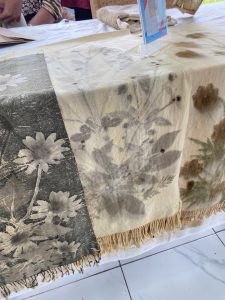
The first stop was Suak Gual Village, where the directors met with a local women’s empowerment group known as Suak De Gual. The group, consisting mostly of fishermen’s wives, produces eco-print fabrics made from plants found around their homes. This creative initiative, supported by the Directorate General of Capture Fisheries, not only introduces the rich biodiversity of Suak Gual through art but also helps increase local household income. Impressed by their creativity, both directors expressed plans to use the eco-print products as official souvenirs for future MMAF events.
The next visit was to the local harbor in Gual Village, where the directors observed the innovative use of electric boats by fishermen. This sustainable practice inspired discussions about developing Mendanau Island into a Carbon-Free Island pilot project. The initiative would focus on achieving a balance between carbon emissions and carbon sequestration through the conservation of blue carbon ecosystems, particularly mangroves and seagrass meadows.
Mendanau Island is considered an ideal location for this pilot project due to its relatively untouched natural environment, well-preserved mangrove forests, and limited pollution sources. The directors noted that the island’s ecological conditions provide a strong baseline for studying carbon emissions, blue carbon storage, and ecosystem services that support coastal resilience.
According to this field visit, Mendanau’s healthy coastal and terrestrial ecosystems offer the potential for achieving near-zero carbon emissions, or even a surplus of carbon sequestration. This presents a valuable opportunity not only for climate action but also for green investment. By preserving mangrove ecosystems and promoting sustainable livelihoods, Mendanau could attract investment in carbon credit markets and blue economy initiatives, reinforcing its role as a model for Indonesia’s carbon-free island development.
The MMAF’s vision aligns with global efforts to promote sustainability, resilience, and community participation in managing small islands. Through initiatives like this, Mendanau Island could become a living example of how conservation, innovation, and investment work hand in hand to build a greener future for coastal communities.
Correspondence Author: Tri Wibowo