
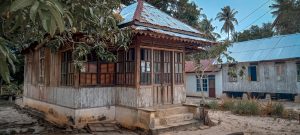
Standing gracefully on wooden stilts, the Rumah Panggong Belitong is more than just a traditional house, it is a reflection of the island’s coastal culture, environmental wisdom, and community philosophy. This iconic home of Belitong draws from Malay and coastal architectural styles, designed high above the ground to adapt to the humid, flood-prone climate while maintaining harmony with nature.
From the outside, the house radiates simplicity. Built largely from bulin wood or Eusideroxylon zwageri, known for its strength and durability, and complemented with natural materials such as banana stems or wooden planks for walls, Rumah Panggong is a perfect example of eco-friendly design long before sustainability became a global trend. The use of bulin in construction also shows how local communities creatively use renewable forest resources without damaging biodiversity.
Step inside, and you’ll find a wide, open main room, free from partitions. This is the heart of family life, where gatherings, recitations, and community discussions take place. The openness not only makes the house feel spacious, but also symbolizes togetherness and inclusivity. Behind it lies the loss, a transitional space that separates the main room from the kitchen. The kitchen itself, placed at the very back, reflects practicality, a space for cooking, storing food, and dealing with daily household chores.
Architecturally, the house is supported by nine main pillars, a symbolic number passed down from Belitong’s ancestors. These pillars ensure structural strength while grounding the building in local traditions. Windows are abundant, allowing natural light and ventilation to flow freely—another eco-friendly design that minimizes the need for artificial lighting or cooling.
The philosophy of Rumah Panggong is deeply tied to simplicity and equality. Traditionally, these houses are left unpainted, preserving the natural colors of the wood. This reflects the community’s value of living in harmony without social distinctions based on wealth or appearance. A house without paint becomes a symbol of humility, reminding its inhabitants of unity and shared well-being.
More than a dwelling, Rumah Panggong Belitong embodies a living dialogue between people, culture, and the environment. Its architecture proves that tradition and sustainability can coexist, offering lessons for modern society in building homes that are not only functional, but also respectful of nature and community values.