
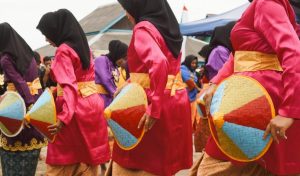
What if a ritual could tell us more than just stories of the past? In Belitong, the tradition of Begawai—a communal preparation ritual deeply rooted in harmony between humans and nature—does exactly that. More than a cultural celebration, Begawai invites us to reflect on questions of sustainability, gender roles, and inclusion in society.
At its core, Begawai is about working together. Commonly performed during traditional weddings, the ritual unfolds through various stages: preparing food, setting up communal spaces, and carrying out symbolic acts. Each stage requires collective effort, and here lies its most intriguing aspect—participation is not bound by gender.
Men, women, and younger generations all play essential roles, each contribution carrying both symbolic and practical meaning. Women often take the lead in preparing food and organizing spaces, while men handle labor-intensive tasks. Yet both are regarded as equally important, with the ritual’s success depending on the synergy of all participants.
From this perspective, Begawai becomes more than a ritual. It’s a social framework where gender participation is visible, respected, and celebrated. Instead of strict divisions, the practice highlights complementarity and different roles working in synergy for one shared goal. In many ways, Begawai reflects what modern discussions on gender inclusion are striving for: acknowledgment of diverse contributions without diminishing their value.
This inclusive participation also reinforces community solidarity. When everyone, regardless of gender, has a place in the ritual, it strengthens the idea that cultural sustainability depends on collective effort. And just as Begawai symbolizes harmony with the environment, it also symbolizes harmony within society itself, balancing differences into unity.
Begawai invites us to see culture as a living practice. It tells us that traditions are not just about preserving the past, but also about creating spaces where participation, respect, and equality can flourish. Could it be that rituals like Begawai hold hidden lessons for how we build inclusive and sustainable societies today?