
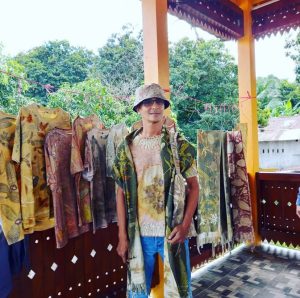
Mendanau Island, located within the Belitong Geopark area is not yet a major tourist destination. However, the daily activities of its residents reflect a wealth of potential to support sustainable tourism and highlight the community’s creativity and resilience.
One example is the women of Suak Gual Village, who produce eco print batik fabric through the De Gual Ecoprint Kalaju group. Initiated from training by the Ministry of Maritime Affairs and Fisheries in 2021, they now create unique souvenirs using leaves and flowers as natural dyes. Their products, priced between IDR 450,000–750,000 per cloth, have even reached international buyers during the G20 Ministerial Meeting in Belitong.
Alongside batik, many women preserve traditional skills by making fish and squid crackers (kemplang). This craft, passed down for generations, was further improved when BRIN introduced packaging and labeling techniques in 2017. Today, around forty producers operate in Mendanau, selling their preservative-free crackers as far as Palembang, generating incomes up to IDR 10 million per month.
Shipbuilding is another skill deeply rooted in the island. Local builders like Haji Oleng specialize in constructing durable wooden boats using the gelam technique, a trusted method that uses local woods and bark. A 20-meter fishing boat, for example, can take six months to complete and is valued at IDR 250 million, showcasing both craftsmanship and economic opportunity.
Mendanau is also famous for its durian orchards, where the fruit grows naturally without fertilizer. Though smaller than commercial varieties, the local durian is cherished for its rich, copper-yellow flesh and sweet taste. During harvest seasons, visitors can enjoy the fruits directly at the plantation, sometimes for as little as IDR 5,000 per piece.
These activities—ecoprint batik, traditional food production, shipbuilding, and durian farming—demonstrate how local knowledge and resources can enrich tourism. By integrating such community practices into visitor experiences, Mendanau Geosite has the potential to develop sustainable tourism that not only preserves tradition but also strengthens the island’s economy and identity.