
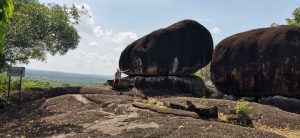
Bukit Peramun, also known as The Peramun Hill Granite Forest, is one of the most iconic geosites in Belitong. The hill is made up of Tanjung Pandan granite (S-type granite) formed during the Triassic period, around 208–245 million years ago. This granite contains quartz, alkali feldspar, mica, hornblende, and biotite minerals, and in some weathered parts, it may even contain rare earth elements.
At the top of the hill, visitors can see the famous “Balancing Rock” or tor landscape, a typical natural feature of Belitong. These giant granite formations are not only breathtaking but also tell the geological story of the island.
Bukit Peramun is more than just geology, it is also a sanctuary of biodiversity. The forest is home to 147 species of plants and 86 species of animals, including several rare and endemic species. Many of these plants are traditionally used as herbal medicine, reflecting the local culture of “Peramun,” which means concocting or mixing herbs. This connection between geology, biology, and culture makes the site a living classroom of nature and tradition.
One of the most remarkable inhabitants of Bukit Peramun is the Belitong Tarsier (Cephalopachus bancanus saltator), a small nocturnal primate that is endemic and classified as a threatened species. Its presence highlights the ecological importance of the hill. Today, Bukit Peramun is managed through community-based conservation and geotourism called Arsel Community, with the local people actively organizing activities while preserving their cultural wisdom. Visitors can enjoy eco-tourism packages, digital technology experiences like augmented reality trails, and guided tours that blend science, culture, and adventure through its official website peramun.com.
With its geological wonders, rich biodiversity, and cultural traditions, Bukit Peramun stands as a symbol of how conservation, tourism, and local wisdom can harmoniously coexist, while also holding international scientific significance.