
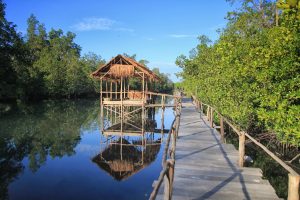
Kuale Sijuk, also known as The Kuale Granite Mangrove Forest, is one of the most unique geosites in Belitong. Located in Sijuk Village, Sijuk Subdistrict, this site beautifully combines geology, biodiversity, and cultural heritage in one destination. Geologically, Kuale Sijuk is shaped by the weathering of Tanjung Pandan granite, which has formed quartz sand and alluvial deposits from the Quaternary age. In addition, visitors can still find granite blocks from the Triassic period (208–245 million years ago), a reminder of Belitong’s ancient geological story.
What makes Kuale Sijuk truly special is its role in conservation and sustainability. Once considered an area with mining potential, the site has instead been protected and transformed into a thriving mangrove forest and natural tourism destination. Today, the mangroves cover about 60 hectares along the Kuale River, offering vital protection for the coastline while serving as a habitat for diverse flora and fauna.
For visitors, the mangrove charm of Kuale Sijuk lies in its tranquil atmosphere and opportunities to explore. A series of wooden bridges allows for easy walking and land-based tracking through the mangroves, while rowing boat tours provide a chance to paddle along the Kuale River and experience the ecosystem up close. This blend of river adventure and coastal culture makes it a memorable eco-tourism activity.
Beyond its natural beauty, Kuale Sijuk represents the local community’s dedication to choosing conservation over exploitation. By preserving mangrove forests, residents protect biodiversity, prevent coastal erosion, and develop eco-friendly tourism as a source of sustainable livelihood.
Kuale Sijuk is not only a place to enjoy nature but also a living example of how geology and community conservation can work together. It is a peaceful reminder that protecting the environment creates value far beyond mining.